
IQACC, Taipei (1--3 May, 2026)
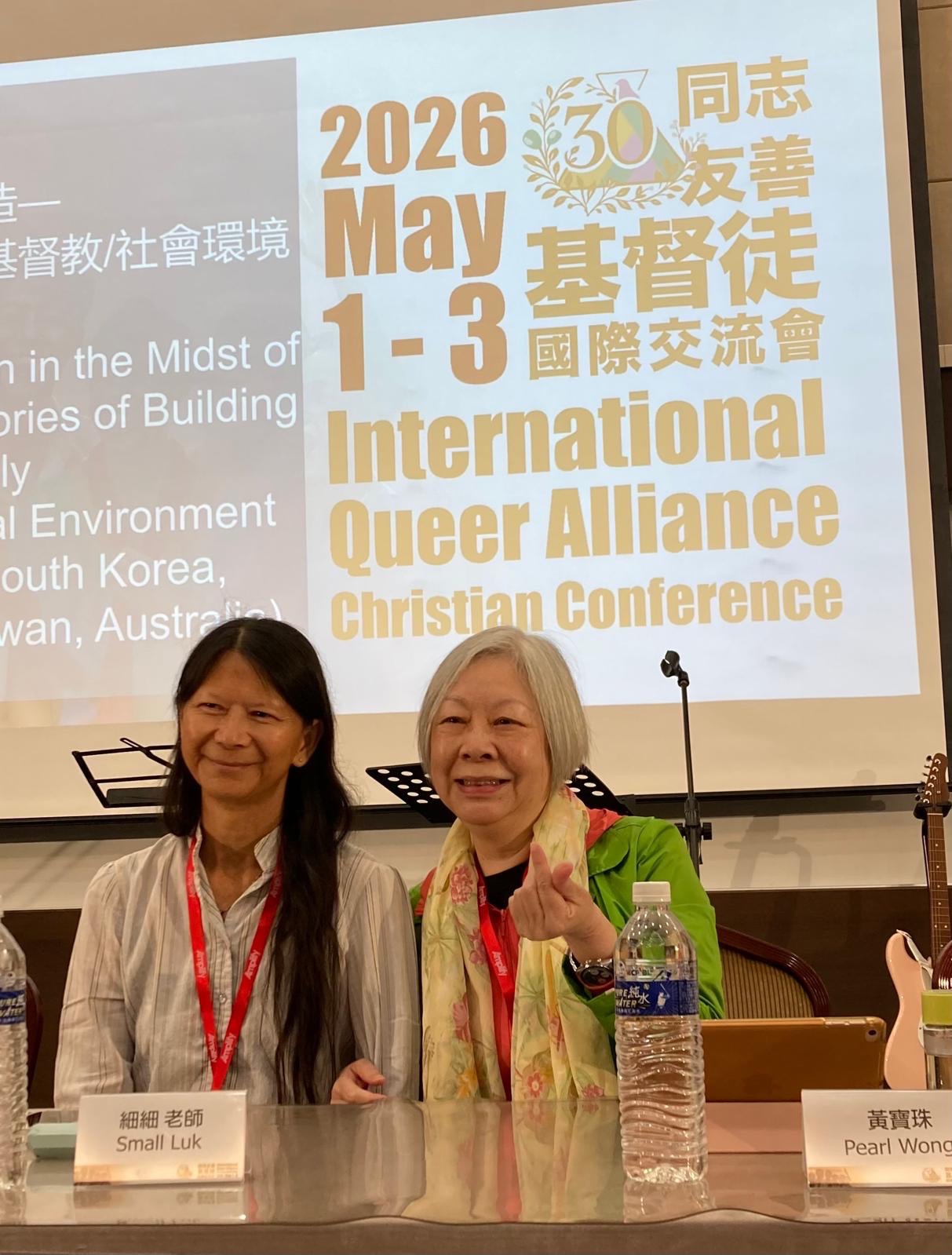
The International Queer Alliance Christian Conference (IQACC) was hosted by Tong Kwang Church in Taipei from 1--3 May and co-organized by Amplify. The last regional gathering of inclusive churches Amplify organized was in 2018, so this was a long-awaited reunion --- made even more meaningful as we also celebrated Tong Kwang Church's 30th anniversary of inclusive ministry. In total, 300 people attended from 11 countries, and the feedback has been overwhelmingly positive.
Read also: From Amplify to IQACC: A Faith Connection Transcending Borders and Languages (by Amy Phoon)
Highlights included:
- A regional gathering of worship teams, worshipping together with songs from different churches and in multiple languages
- A power-packed 8-hour seminar by Kathy Baldock and Ed Oxford from the 1946 documentary team, offering an in-depth examination of how the word "homosexual" first made its way into the Bible in 1946 and how we arrived at where we are today
- Stories of the journeys and struggles of pastors, ministries, and churches across Asia as they work to create and nurture safe spaces for LGBTIQ+ people to belong and grow in their faith
- Workshops led by pastors and leaders in theological movements from across Asia on sexual ethics, gender identity, and individual and relational wholeness in Christ.
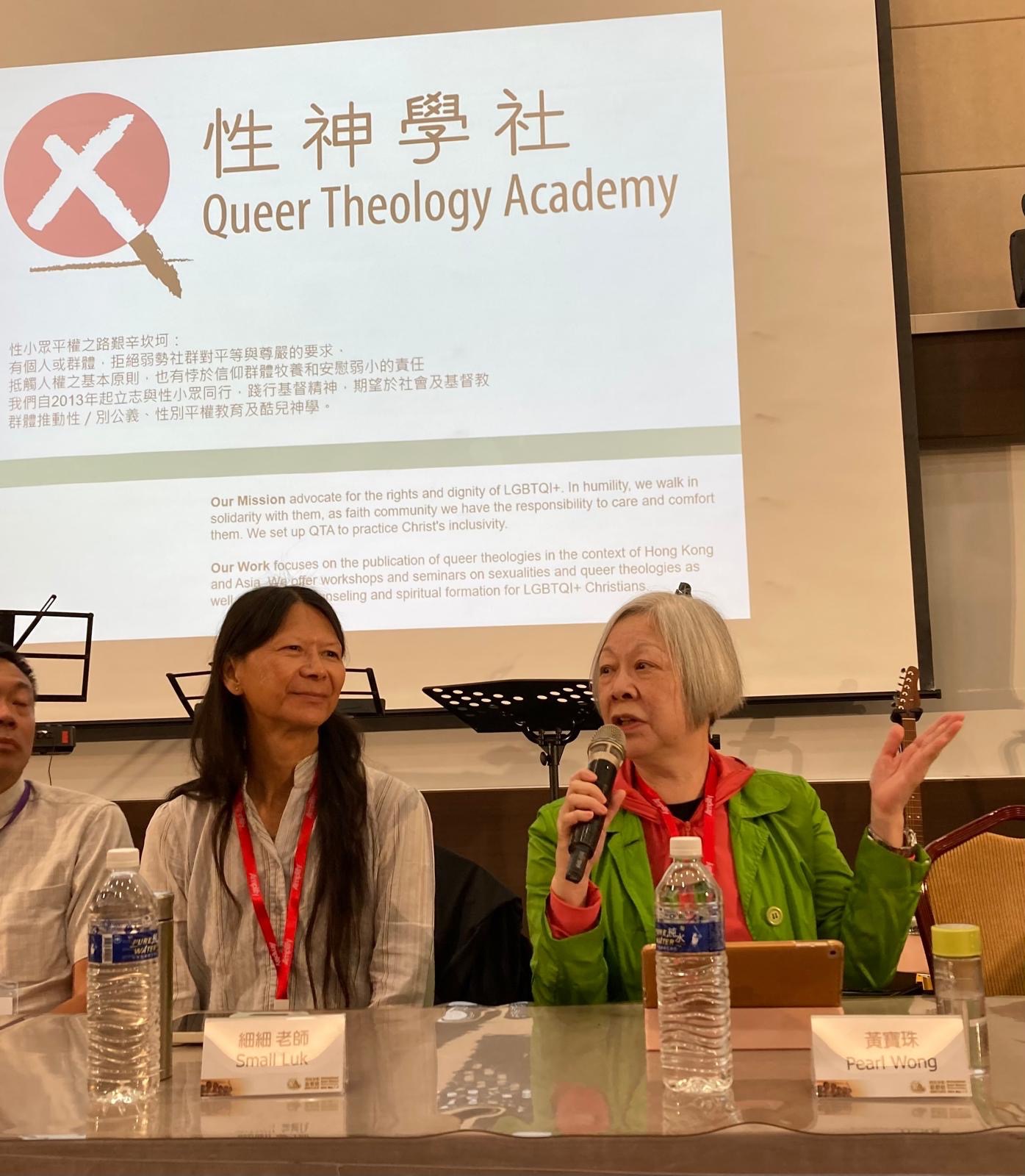
Pearl Wong, chairperson of Queer Theology Academy (QTA) was the guest speakers in two sessions.
- Session 1: A New Creation in the Midst of Darkness: Stories of Building a LGBT+ Friendly Christian Community. Pearl introduces the works of QTA.
- Session 2: The Myth about Bisexuality and Theological Reflection. (Presentation Notes on Bisexuality see below)
When did I find out my bisexuality, my experiences?
Bisexuality: Myths and facts
Bisexuality is defined as "an enduring romantic, emotional, and/or sexual attraction toward people of more than one sex or gender."
Myth: Bisexual people are promiscuous, incapable of a committed relationship. People go through this "bisexual" phase before they can identify themselves as lesbian/gay. Bisexual people are no longer bisexual if they marry someone of another sex. Bisexual people are taking advantage of "straight privilege". Bisexuals are confused, in "transition" before they decide on their sexual orientation.
Fact: Bisexual people are capable of being faithful and committed in their relationships as people of other sexual orientations. bisexuality is a distinct sexual orientation, and many people recognize their bisexuality throughout their lives. bisexual people choose their partner based on character, affections, shared values, etc., just like straight, lesbian, and gay people do, instead of based on which life is easier. bisexuality is a long-term orientation.
Heterosexism and homosexuality both create Biphobia
Heterosexism creates binary opposites, normal heterosexuals and abnormal homosexuals. People are put into two boxes, one labeled straight and the other one gay. Bisexual people do not fit into these boxes; therefore, both boxes with labels become oppressors to bisexual people because both treat bisexual people as outcasts.
Bisexuality and queer theology Add bisexual and stir", it provides new insight to queer theological discourse
The existence of diverse theologies affirms that doing theology by those within a particular context is crucial to accurately reflect their struggles and become witnesses of God's grace. We need to respect the "bi experiences" because their experiences will tell us something we don't know.
Bisexual erases binary categories and boundaries
Removes the binary opposites that define our lives and replaces them with fluidity. Opposites convey value judgment and breed discrimination and violence. Erasing binaries to embrace hospitality, solidarity, and peace.
Exploring bisexual relationships in the Bible
In the Jonathan and David story, several biblical texts reveal the covenantal and loving relationship between the two men. David's sexual desire for Bathsheba makes it obvious that David is also attracted to women.
In Ruth and Naomi's story, both women are married to men at the beginning of the story. Ruth then expresses her deep emotional relationship with Naomi by following her back to her homeland. Ruth later married Boaz and had a son, Obed, and the story further indicated that Ruth and Naomi raised Obed together.[^1] It is more accurate to describe Ruth and Naomi as bisexual women having relationships with both men and women than to emphasize their same-sex relationships.
Bi/Christ - the boundary-crosser
The diverse images of Jesus challenge the conventional heteropatriarchal norm to affirm sexual minorities. Both McLaughlin and Garber boldly propose the transvestite Jesus to criticize the rigid boundaries of gender and sexuality; the transvestite image opposes binary thinking and proposes a "third" mode to suggest alternatives and possibilities.[^2] Marcella Althaus-Reid proposes the image of Bi/Christ to destabilize the heterosexual frame that denies relationships outside of heterosexuality, and challenges the binary categories of heterosexual and homosexual. Althaus-Reid claims that bisexuality eliminates the either/or thoughts and categories.
Making the "B" visible in our faith community -Affirmation of diversity.
Carter Heyward's lament that nothing is more heartbreaking to God than the denial of our power to recognize, call forth, and celebrate our own identity, without this true self, we cannot have a right relation with others.[^3] voices of the marginalized, such as voices of women, the colonized, racial and sexual minorities, who have once been silenced, must speak up in solidarity. God's love and justice are manifested by the acceptance of differences among us and by appreciating the beauty in our diversity.
Bisexuality: gender fluid, gender non binary, queer
Patrick Cheng asserts that Jesus crosses sexual boundaries to remove the line between homosexual and heterosexual, and bisexuality is an important illustration of what queer theory and the Kinsey report have contended - that sexuality is a fluid and changing phenomenon instead of a binary construct.[^4]
[^1]: Alford-Harkey and Haffner, Bisexuality: Making the Invisible Visible in faith Communities, 36-37.
[^2]: Ibid. 179-180.
[^3]: Heyward, Touching Our Strength: The Erotic Power and the Love of God (San Francisco: Harper & Row, Publisher, 1989), 21.
[^4]: Ibid., 80.