

By Mau Kwok Lam
Introduction: When Climax Arrives, Where is God? — The Censored Flesh and the Split Between Spirit and Desire
Have you ever experienced that inexplicable, yet painfully real inner tremor?
In the fierce ecstasy of lovemaking with your partner, or in the deep, quiet aftermath of lying together skin against skin, has an unexpected flicker of sacred awe and gratitude ever crossed your mind? In that singular moment, when the delight of the soul and the pleasure of the flesh intertwine, you perceive the miracle of your being torn wide open—connected at the deepest level to another creature. It ought to be an encounter with grace: the seamless coexistence of spirit and desire.
Yet almost instantaneously, an icy pang of guilt—lodged deep in the Christian subconscious—drags you back to earth: “Is God watching this naked, sweating, panting body? In the midst of such untamed physical pleasure, is thinking of God a holy epiphany, or a blasphemous transgression?” In the aftermath of climax, many believers are seized by an impulse of shame, rushing to pull their clothes back on or slipping into the shower, as though only by thoroughly washing away the fluids and memories of the flesh could the soul dare to bow before the Divine once more.
Some may object that the contemporary church has long since shed such puritanical rigidity. It is true that in many churches practising modern praise and worship—particularly those within charismatic traditions—stages are alive with pop rhythms and driving basslines. Believers are actively encouraged to raise their hands, leap, sway, weep, shout, and laugh aloud, all hailed as undeniable signs of the Holy Spirit’s movement.
Yet we must honestly ask: does this sensory release truly embrace holistic embodiment? Or is it merely a strictly policed, functional “spiritual stimulant” ?
The institutional church seems willing to grant the body entry only on condition that it serves as an aseptic, desexualised vessel for “supernatural ecstasy”. The moment the body steps beyond the stage lights and returns to real life—the moment it exhibits unsanitised sexual impulses, queer longings, chronic nervous exhaustion, or the messiness of illness and physical disability—the church’s ancient moral defences slam shut. Instantly, these vulnerable human experiences are condemned as suspect “carnal lusts of the flesh”.
This profound disquiet, compulsion to control, and visceral rejection of bodily functions, sensory joy, emotional vulnerability, and autonomic nervous responses is known theologically and sociologically as “Sarcophobia” (the fear of the flesh) . [1] This is not a clinical psychiatric diagnosis; rather, it is a collective spiritual trauma deeply woven into the historical fabric of the church, and acutely amplified in modern Chinese Christian culture. It treats the physical body as an impediment to the soul, an incubator of moral corruption, and a lethal obstacle on the path to holiness.
Yet is this truly what Scripture teaches? If the physical body were so inherently corrupt, why does the crowning mystery of Christian faith declare that “the Word became flesh” (John 1:14), rather than descending as a pure, disembodied spirit? Drawing on the critical insights of contemporary queer and body theologians such as Susannah Cornwall and James B. Nelson, alongside a rigorous historical and linguistic re-examination of Scripture, we discover that the “sarcophobia” that has tormented generations of believers—especially sexual minorities (queer Christians)—is at root a two-thousand-year-old theological misunderstanding, forged by political power and cultural policing. [2]
1. Untying a Two-Millennia Linguistic Knot: When Sarx (Flesh) was Mistaken for Sōma (Body)
For ordinary Christians, the persistent guilt attached to physical embodiment is most frequently triggered by a common misreading of the Pauline epistles.
In traditional pulpit teaching, the Apostle Paul is often caricatured as an austere ascetic who harboured a fierce contempt for the flesh. Preachers routinely quote Romans 8: “Those who live according to the flesh have their minds set on what the flesh desires … The mind governed by the flesh is death” (Rom 8:5–6); or Galatians 5, with its sharp antithesis between the “flesh” and the “Spirit” (Gal 5:16–17). Chinese and English translations that render the Greek terms as “the flesh” ( sarx ) and “lust” ( epithumia ) have fostered a crude, popular assumption: whatever belongs to our biological tissue, our sensory appetites, and our sexual desires must be inherently hostile to God.
However, contemporary biblical scholars (such as Dale B. Martin and Rudolf Bultmann) have demonstrated that this represents a profound linguistic and theological error. [3] In Paul’s Greek vocabulary, two distinct terms are deployed with radically different theological meanings:
- The Body ( Sōma , σῶμα):
This refers to the whole embodied person (Embodiment) in their creaturely reality. Sōma is the masterpiece of God’s good creation, the indispensable medium through which we relate to others and experience the cosmos. Paul explicitly affirms that the body is not meant for sexual exploitation, but “for the Lord, and the Lord for the body” (1 Cor 6:13). Crucially, the believer’s body is the “temple of the Holy Spirit” (1 Cor 6:19). The ultimate Christian hope is not the ethereal flight of an unbodied ghost to heaven, but “the redemption of our bodies” in the resurrection (Rom 8:23; 1 Cor 15).
- The Flesh ( Sarx , σάρξ):
Whilst Paul occasionally uses sarx in a neutral biological sense, in his core doctrinal arguments it serves as an eschatological and theological metaphor . It denotes a fallen world order trapped under the dominion of sin and death—the tragic human illusion of self-sufficiency, seeking to control existence apart from God’s grace. [4]
Crucially, the “works of the flesh” ( erga tēs sarkos ) that Paul denounces in Galatians 5 include hatred, discord, jealousy, fits of rage, selfish ambition, dissensions, and factions (Gal 5:19–21). These are sins of power, ego, and ideological idolatry; none requires sexual anatomy, yet all belong squarely to sarx . Conversely, eating when hungry, resting when exhausted, passionate embraces, and reciprocal sexual joy are authentic expressions of the sōma receiving God’s creaturely gifts.
By translating sarx indiscriminately as “flesh” or “carnal body”, and narrowing epithumia (which simply means deep yearning or desire) into exclusively sexual “lust”, historical church translation erected a disastrous mental barrier: we mistook the theological metaphor of a rebel world system ( sarx ) for the daily physical sensations of our created bodies ( sōma ). [5] When the church demands that believers “crucify the flesh”, laypeople mistakenly believe they are commanded to anaesthetise their nervous systems, extinguish human tenderness, and freeze their erotic warmth—turning what was meant to be a temple of the living God into an unfeeling prison.
2. Historical Complexities: From the Defence Against Gnosticism to Augustine’s Anxiety Over Loss of Control
How did the Christian church contract this chronic sarcophobia? Popular theological apologetics often blames “the infiltration of Platonic dualism”, setting up a simplistic contrast between “Hebrew holistic thought” and “Greek body-denying dualism”. Yet real church history is far more nuanced.
The Early Church’s Battle for the Flesh
In the second and third centuries, the nascent Christian movement fought its fiercest battle for survival not against fleshly indulgence, but against Gnosticism and Docetism. Gnostics taught that the material world was created by an inferior, malevolent deity, and that Christ could never have possessed a vulgar physical body; He had merely appeared in human guise like a phantom.
Confronted with this radical hatred of matter, early Church Fathers such as Irenaeus of Lyons and Tertullian mounted a fierce defence of embodiment. In his treatise On the Resurrection of the Flesh ( De Resurrectione Carnis ), Tertullian composed one of the most magnificent tributes to the human body in ancient literature:
“The flesh is washed in baptism, that the soul may be cleansed from stain; the flesh is anointed, that the soul may be consecrated; the flesh is signed with the cross, that the soul too may be fortified; the flesh is overshadowed by the imposition of hands, that the soul also may be illuminated by the Spirit; the flesh feeds on the body and blood of Christ, that the soul likewise may fatten on its God. They cannot, then, be separated in their recompense, when they have been conjoined in their labour.” [6]
The early ecumenical church decisively rejected Gnostic escapism, enshrining the Incarnation and the bodily resurrection ( resurrectio carnis ) as foundational dogma. This proves that Christianity’s original theological DNA was not body-negative; it was an extraordinary sanctification of flesh and blood.
Augustine’s Shadow: When Physiology Became Evidence of Original Sin
This robust affirmation of the body suffered a profound fracture in the fourth and fifth centuries through the monumental influence of Saint Augustine of Hippo.
In contemporary sexual theology, Augustine is frequently caricatured as a neurotic architect of sexual repression. To be fair, Augustine was no Manichaean; having spent years extricating himself from Manichaeism, he insisted that the body and sex were originally good creatures of God. [7] Nevertheless, in his fierce later debates with the Pelagians concerning how “Original Sin” is inherited by every human being, Augustine formulated a fateful theory:
- The Rebellious Will: Augustine argued that the root of Adam’s fall was pride—the human will rebelling against God. As divine retribution, the human body in turn rebelled against the human will.
- Involuntary Arousal: Augustine pointed to a physiological phenomenon that caused him immense psychological distress: the male erection frequently occurs without the consent of conscious reason ( involuntarius motus ). One cannot summon or dismiss it purely by willpower. This uncontrollable somatic drive he termed concupiscence ( concupiscentia ) . [8]
- The Transmission of Sin: Augustine concluded that because every act of sexual reproduction is inevitably accompanied by this “irrational loss of control and lust”, original sin is biologically transmitted through the very mechanics of sexual conception.
The devastating legacy of Augustine’s thesis lies here: he conflated spiritual rebellion against God with the autonomous physiological rhythms of the human nervous system (heartbeats, erections, genital lubrication, and sexual arousal). Following Augustine, Western Christianity reached a grim consensus: sexual intercourse was excused only when undertaken strictly for procreation; any delight taken in sensory pleasure was a morally tainted compromise. The body was no longer an innocent temple; it was a treacherous beast waiting to betray the soul.
3. Whose ‘Nature’? The Collusion of Power Hierarchies and Reproductive Utilitarianism
During the Middle Ages, Thomas Aquinas synthesised Aristotelian philosophy with Christian ethics, formalising the Natural Law tradition that continues to dominate Roman Catholic moral theology. Yet as theologian Susannah Cornwall persuasively argues in Theology and Sexuality , what the church has historically sanctified as “unchanging natural law” is often little more than the projection of contingent social power hierarchies and reproductive teleology onto the mind of God. [9]
From Roman Hierarchy to “Natural Law”
How theological discourse excluded marginal bodies
Foucault’s Insight: Ancient Dominance and Modern Biopower
Drawing on Michel Foucault’s genealogical analysis in The History of Sexuality , we can perceive the ancient Roman foundations of Western sexual morality. [10] In antiquity, sexual ethics was not organized around personal sexual orientation, but around hierarchies of social dominance : a free Roman male citizen (the penetrator) held an absolute right to dominate social subordinates—enslaved persons, women, and youths. When early Christian moralists absorbed Roman patriarchal frameworks, they inherited a visceral dread of passivity, vulnerability, and non-reproductive pleasure.
In scholastic theology, any sexual act that did not allow for biological reproduction (masturbation, homosexual intimacy, oral sex, contraception) was classified as an abominable sin contra naturam (“against nature”). This logic reduced God’s exuberant creation to an industrial assembly line for procreation:
- Queer and Transgender Bodies: Because they refuse the rigid reproductive division of labour, they are branded as “perverse rebels against nature”;
- Infertile, Single, and Disabled Bodies: Because they do not conform to the idealised myth of reproductive efficiency, they are marginalised within church communities as defective afterthoughts.
When church leaders declare that a particular body or desire is “unnatural”, we must urgently ask: is this the voice of the loving Creator, or is it the voice of human “biopower” —a regime invented to police bodies for patriarchal inheritance and economic productivity? [10]
4. Strangled by Dual Phantoms: The Unholy Alliance of Western Pietism and Chinese Neo-Confucian Orthodoxy
If Western sarcophobia stemmed from Augustinian anxiety and medieval natural law, its transmission to the Chinese world encountered a host culture that was equally suspicious of individual bodily desire, producing a devastating “dual stranglehold” on Chinese believers.
1. Neo-Confucian Asceticism Meets Puritan Moralism
The Western missionaries who arrived in China in the nineteenth and twentieth centuries brought with them Victorian puritanism and pietistic revivalism. This brand of Christianity—obsessed with strict self-denial, the denunciation of worldly pleasures, and an absolute taboo on sexuality—did not meet resistance in China. On the contrary, it found a ready ideological partner in the Song-Ming Neo-Confucian dogma of “preserving heavenly principle and eradicating human desire” ( cun tianli, mie renyu ) .
In traditional Chinese kinship ethics, the body never belonged to the individual: “Body, hair, and skin are received from one’s parents and must not be harmed” —an ethic that mortgaged physical existence to ancestral lineage. The classic dictum “Of the three unfilial acts, having no descendants is the worst” bound sexual activity exclusively to the continuation of the patriarchal line. When evangelical original sin doctrines merged with Chinese ancestor worship, a deeply utilitarian, anti-pleasure view of the body was forged: individual delight was deemed selfish; queer longing was condemned as filial treason; and a human body had legitimate worth only if it produced grandchildren for the family and tithers for the church.
2. Watchman Nee’s Trichotomy in The Spiritual Man
Within indigenous twentieth-century Chinese theology, no single work has inflicted deeper damage on believers’ relationship with their bodies than Watchman Nee’s (倪柝聲) three-volume treatise, The Spiritual Man (《屬靈人》). [11]
Nee championed a rigid trichotomy of “Spirit, Soul, and Body” , constructing an uncompromising spiritual caste system:
- The Spirit ( Pneuma ): The most exalted realm, the sole organ capable of direct communion with God;
- The Soul ( Psyche ): The intermediary realm of intellect, emotion, and will, constantly prone to fleshly rebellion;
- The Body ( Sōma ): The basest realm, viewed as the corrupt gateway through which Satan and sin launch their attacks.
In Nee’s ascetic framework, being “carnal” ( belonging to the flesh ) or “soulish” was the mark of spiritual immaturity and rebellion. The highest goal of Christian discipleship was to allow “the cross to crush the soul and the body”, forcing one’s natural desires and senses to “die completely” to the world. This theology swept across Chinese Christian communities globally—from the Local Churches (Little Flock), Presbyterians, and Baptists in Hong Kong and Taiwan, to the vast house church networks in mainland China.
Generations of Chinese Christians learned a ruthless discipline of somatic self-alienation: the less they felt their bodies during worship, the more “spiritual” they imagined themselves to be; the more they loathed their sexual desires, the more they believed they were “under the Holy Spirit’s conviction”. Nee’s trichotomy produced an army of emotionally dissociated Christians, cut off from their own flesh.
3. The Trap of ‘Spiritual Bypassing’: Masking Emotional Suppression as Spiritual Discipline
Sarcophobia does not merely police genitals and sexual desire; its most insidious poison is the total denial of the believer’s nervous system and authentic neurophysiological distress.
Modern psychosomatic medicine and trauma neurobiology have established beyond doubt: emotions are not disembodied phantoms; emotions are fundamentally somatic events. Anxiety, grief, and terror are not abstract spiritual battles; they are physical realities—sympathetic nervous system activation, cortisol surges, tachycardia, visceral chest tightness, and gastrointestinal spasms.
Yet churches infected with sarcophobia have developed a toxic culture of “Spiritual Bypassing” —using pious theological clichés to suppress genuine somatic suffering.
A poignant, real-life example can be found among the diaspora of Hong Kong Christians who have recently relocated to the United Kingdom. One believer, awaiting a decision on their visa and settled status from the Home Office month after month, fell into debilitating, chronic anxiety. The response from their church pastors and fellowship was chillingly dismissive: “You just need to have more faith in God,” “Do not worry about tomorrow,” “Cast all your anxieties upon the Lord in prayer.”
This believer was plunged into acute despair and self-reproach: Why is it that when I kneel in tears to pray, I feel a brief moment of calm, but the instant I return to reality, the racing heart and stomach spasms return with a vengeance?
In Chinese church culture, believers frequently strive for complete emotional stability, mistaking an unruffled affective equilibrium for the biblical peace of God ( Shalom ) . Yet as mortal creatures of flesh and blood, everyone naturally experiences emotional ebbs and flows, fear, and sorrow; such emotional stability is not something that can be artificially forced or conjured through spiritual willpower.
When believers mistakenly treat this forced emotional stability as God’s promised peace, any inevitable resurgence of vulnerability only deepens their distress and triggers a profound crisis of faith: “Why do I have no peace? Is my faith deficient? Has God abandoned me?”
The cruelty of this theology is breathtaking: it distorts the autonomic nervous system and survival alarms that God designed to protect creaturely life into damning proof of spiritual failure. The church tacitly demands that believers become “spiritual specimens”—unmoved by grief, unruffled by terror, immune to anxiety. But when faith demands the erasure of the body’s innate capacity to register pain, the “peace” it promises is not the grace of divine presence, but a spiritual torment of perpetual anxiety and self-condemnation.
4. The Somatic Scapegoat: The Ultimate Exile of the Queer Body in the Chinese Church
When the church dismisses raw somatic alarms and emotional vulnerability as “carnal corruption”, this apparatus inevitably turns its deepest panic upon sexual and gender minorities, rendering the queer body the ultimate scapegoat of the religious system.
Across Chinese-speaking societies, this sarcophobic machinery polices the flesh under various guises: Hong Kong’s bourgeois respectability purges non-conforming bodies from its sanitised family showroom; conservative Taiwanese traditions elevate heteronormative procreation into an untouchable household idol, condemning same-sex eros as cosmic pollution; whilst mainland fundamentalism demonises queer identity as spiritual warfare, frequently subjecting youths to the barbaric brutality of underground “conversion therapy”. [12]
Diverse as these contexts are, their core logic is identical: the lived flesh of believers—its desire, affective vulnerability, and non-normative gender expression—is stripped of divine worth and reduced to a colony for dogmatic discipline. When creaturely embodiment is treated as an existential foe, the foundational mystery of the Incarnation is evacuated of meaning. It is precisely in this landscape of somatic exile that a queer body theology—one that dares to hallow the flesh in all its messiness—becomes an urgent necessity.
5. Queer Incarnation and Body Theology: Encountering God in Wounds and Desires
Faced with this monolithic apparatus of body-denial, queer theology is not an apology for unrestrained hedonism; it is a thoroughgoing spiritual renaissance that returns to the beating heart of Christian faith : the mystery of the Incarnation .
From Sarcophobia to Queer Body Theology
Traditional dualism and body theology, compared across four dimensions
The body is not an object to be transcended, but the place where the divine is present.
1. Refusing the ‘Aseptic Christ’: The Incarnation of Raw Flesh
When John 1:14 proclaims that “the Word became flesh” ( ho logos sarx egeneto ), the Gospel writer intentionally chooses the scandalous, fragile word sarx , rather than an elevated philosophical term. Christ did not appear as a dazzling, disembodied spirit, nor did He pose as a sanitised plastic saint; He took on genuine human flesh.
In his groundbreaking work Embodiment: An Approach to Sexuality and Christian Theology , ethicist James B. Nelson proclaimed what he termed “the scandal of God’s continuing incarnation” : [13]
“Without denigrating the significance of God’s revelation in Jesus, incarnation might yet be understood more inclusively. Then the fleshly experience of each of us becomes vitally important to our experience of God. Then the fully physical, sweating, lubricating, menstruating, ejaculating, urinating, defecating bodies that we are—in sickness and in health—are the central vehicles of God’s embodiment in our experience.” [13]
If Jesus Christ hungered, thirsted, wept, and sweated, His body unquestionably registered the warmth of skin, sensory longings, and deep relational needs. To despise the body is to blaspheme the God who chose to dwell in a vulnerable, mortal body that bled upon a Roman cross.
2. Sexual Longing as Divine Energy ( Eros ): The Ache to Connect
For centuries, the church has driven an artificial wedge between sacrificial love ( Agape ) and erotic desire ( Eros ), treating the former as pure and the latter as dirty animal instinct. Queer theology dismantles this falsehood: Eros is the divine fire planted within creation— the refusal to remain isolated, the holy impulse to cross boundaries and embrace another. [14]
As Rowan Williams argues in his classic essay The Body’s Grace , sex is never mere biological reproduction; it is an existential adventure in learning how to be human. In the gaze of a lover who desires us, we discover for the first time that our physical presence is cherished and deemed worthy. [15] For the queer community, the tender embrace between two persons of the same sex, or a transgender person’s tearful affirmation of their own transformed body after surgery, are sacred sacramental moments where the prison of sarcophobia is shattered, and grace is made flesh.
3. The Risen Body That Retains Its Scars: Marcella Althaus-Reid and ‘Indecent Theology’
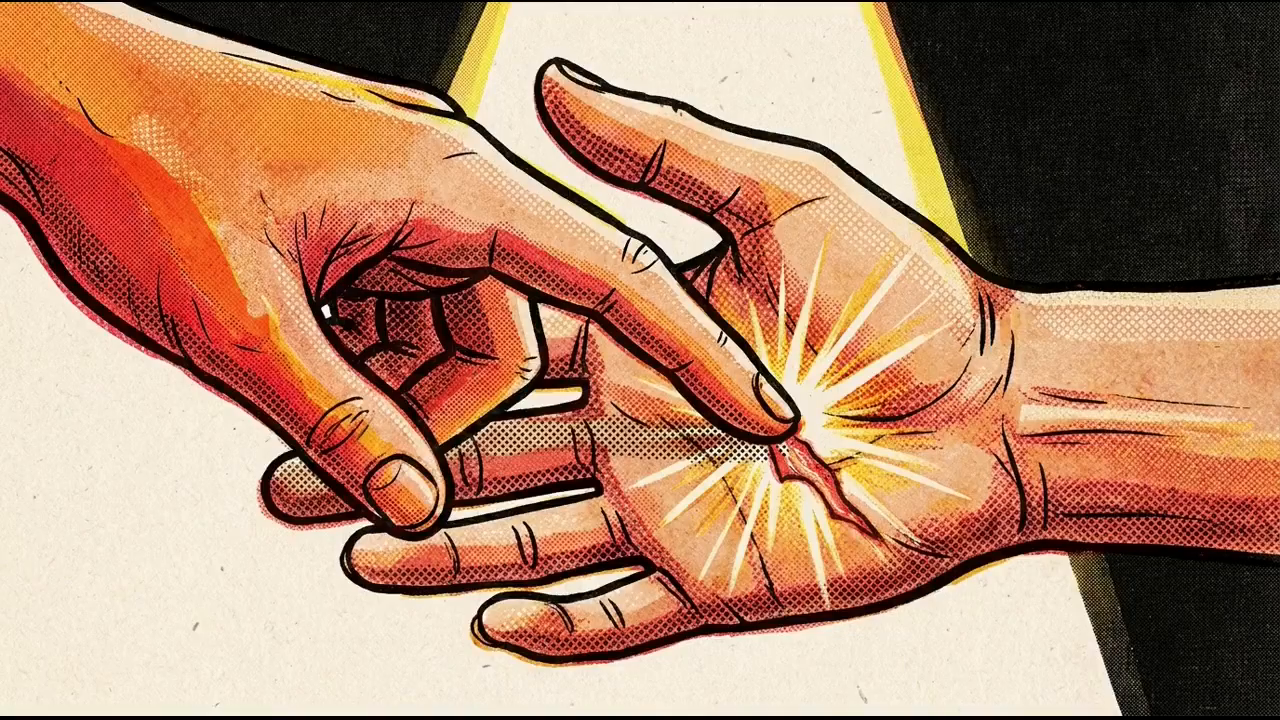
In the Gospel accounts of Easter, the risen Jesus does something astounding: He does not return with an airbrushed, unblemished superhero physique. When meeting the doubting Thomas, He says: “Put your finger here; see my hands. Reach out your hand and put it into my side” (John 20:27).
The Latin American theologian Marcella Althaus-Reid pioneered “Indecent Theology” ( Indecent Theology ), launching a devastating critique of the respectable, sanitised “decency” of middle-class Christianity. [16] The Risen Christ entered into divine glory still bearing the open wounds of Roman torture! This reveals an astonishing truth: in the eyes of God, sacred beauty does not demand pristine, normative perfection; it shines through wounds, messiness, and vulnerability.
In the queer community, there are countless bodies branded by church authorities as “blemished, sinful, and grotesque”:
- The long, jagged surgical scars across the chests of trans men and non-binary people;
- The bodies of intersex individuals whose anatomy defies rigid male-female binaries; [17]
- The self-harm scars on the wrists of survivors who endured the psychological torture of conversion therapy;
- The bodies of people living with HIV, taking daily medication in quiet dignity;
- The bodies of disabled and neurodivergent queer believers, navigating a world built for the able-bodied.
If God embraced the spear-wound in the side of the Risen Christ, God embraces every wounded, non-normative body on this earth. These bodies are not prisons of the soul; they are the living continuation of Christ’s crucified and risen body in the twenty-first century .
Conclusion and Somatic Practice: Bringing the Whole Bodily Self Back to the Altar
Deconstructing the church’s sarcophobia is not a call to thoughtless hedonism; it is the redemption of the body from its historical exile, restoring it to the altar of God’s delight .
A church that fears the flesh, suppresses emotion, and despises sexual longing cannot truly comprehend the Mystery of the Cross or the Eucharist. For at every communion table, the presider does not lift an abstract theological treatise; they lift coarse bread and rich wine, proclaiming: “This is Christ’s body , broken for you; this is Christ’s blood , shed for you.”
Salvation is physical. It is tasted, smelled, chewed, and swallowed.
To every queer believer, and to every Christian who has ever been made to feel ashamed of their desires, their emotions, or their scars: the next time you gather for worship, or sit in the stillness of your room, do not lock your body outside. Practice this simple somatic liturgy of grace :
- Attune to Breath and Somatic Reality: Close your eyes and gently rest your hands upon your chest and belly. Feel your ribs expand with each breath; feel the steady beating of your heart. If waves of anxiety or sadness arise, do not rush to extinguish them with frantic prayer. Whisper to your body: “I see you. I know you are trying to keep me safe. In the presence of God, I do not need to pretend; my vulnerable, trembling nervous system is fully embraced by grace.”
- Reclaim the Flow of Desire: When you sense the ache for human touch, intimacy, and love, do not immediately brand it as sinful lust. Offer this longing to God: “Lord, thank You for creating me with the capacity to desire connection. Guard this desire from exploitative selfishness, and let it become an honest mirror of Your boundless love.”
- Anoint Your Wounds: Gently touch the parts of your body that you have felt ashamed of—your gender characteristics, your surgical scars, your aging skin, or the places where pain lingers. Know this beyond all doubt: in the loving gaze of the Risen Christ, every square inch of your flesh has been crowned with sacred dignity.
Refuse to let anyone imprison you in the theological lie that your body is a foul dungeon. Stand tall in the flesh that laughs, weeps, desires, aches, and loves. Walk boldly before the God who created you.
For in the light of the Incarnation, your flesh is no longer a pit of sin—it is the holy temple where grace dances through the night.
Glossary for Lay Readers
- Sarcophobia: A theological and cultural-critical concept denoting the deep-seated anxiety, shame, and disgust regarding the physical body, sensory pleasure, sexual desire, and autonomic nervous responses embedded within Christian history.
- Flesh ( Sarx ) vs. Body ( Sōma ): The pivotal distinction in Pauline theology. Sōma denotes the whole, created, good, and resurrectable embodied self as the “temple of the Holy Spirit”; Sarx is a theological metaphor for human self-sufficiency and the fallen world order enslaved to sin.
- Concupiscence ( Concupiscentia ): A key concept in Augustinian theology, referring to disordered desire operating beyond the control of reason—specifically exemplified by the involuntary nature of male sexual arousal—which Augustine posited as the vehicle transmitting original sin through procreation.
- Embodiment: A contemporary theological and phenomenological concept emphasising that human beings do not merely “possess” a bodily shell; rather, we are our bodies. Faith, knowledge, emotion, and divine revelation occur only in and through concrete somatic existence.
- Indecent Theology: Founded by Latin American queer feminist theologian Marcella Althaus-Reid, this theological framework dismantles the sanitised, desexualised, middle-class “decency” of traditional theology, rooting liberation in the raw, messy, and non-normative experiences of marginalised and sexual bodies.
📺 Watch the YouTube Video / Listen to the Podcast Episode:
Notes and Citations
[1] On the genealogy of “Sarcophobia” and Christian anxiety regarding physical materiality and sensory desire, see Susannah Cornwall, Theology and Sexuality , SCM Core Text (London: SCM Press, 2013), 20–35. ↩
[2] On Christianity as the “religion of the Incarnation” and the theological reclamation of the body, see Margaret R. Miles, The Word Made Flesh: A History of Christian Thought (Malden, MA: Blackwell, 2005), 1–6; see also Susannah Cornwall, Theology and Sexuality , 36–42. ↩
[3] Dale B. Martin, The Corinthian Body (New Haven, CT: Yale University Press, 1995), 3–37; see also Rudolf Bultmann, Theology of the New Testament , vol. 1, trans. Kendrick Grobel (New York: Charles Scribner’s Sons, 1951), 190–209. Martin and Bultmann establish the critical Pauline distinction between sōma as the integrated person and sarx as the sphere of fallen mortality. ↩
[4] On Paul’s theological definition of sarx as a non-physiological category, see James D. G. Dunn, The Theology of Paul the Apostle (Grand Rapids, MI: Eerdmans, 1998), 62–73. Dunn demonstrates that sarx in Paul denotes creaturely weakness under the dominion of Adam’s age, and must not be reduced to biological anatomy. ↩
[5] On the semantic narrowing and moralisation of epithumia (which in classical and Hellenistic Greek simply denotes intense longing or yearning) into hyper-sexualised “lust” through theological translation history, see Friedrich Büchsel, “ἐπιθυμία, ἐπιθυμέω,” in Theological Dictionary of the New Testament , vol. 3, ed. Gerhard Kittel, trans. Geoffrey W. Bromiley (Grand Rapids, MI: Eerdmans, 1965), 168–172. Büchsel observes that the New Testament itself frequently employs the term in positive or neutral contexts (e.g. Luke 22:15; Phil 1:23), whereas later Latin ( concupiscentia ) and vernacular translations consistently moralised it as carnal transgression; see also Robert Jewett, Paul’s Anthropological Terms: A Study of Their Use in Conflict Settings (Leiden: E. J. Brill, 1971), 95–116. ↩
[7] Augustine of Hippo, The City of God ( De Civitate Dei ), Book XIV, chaps. 10–13. In refuting the Manichaeans, Augustine insists that sin originated in the pride of the will, not in the physical body itself: “The corruptible body does not make the soul sin, but the sinful soul makes the body corruptible.” ↩
[8] Augustine, The City of God , Book XIV, chaps. 16–24; see also Peter Brown, The Body and Society: Men, Women, and Sexual Renunciation in Early Christianity (New York: Columbia University Press, 1988), 399–427. Brown illuminates how Augustine interpreted autonomous genital arousal as the definitive mark of the fractured human will. ↩
[9] Susannah Cornwall, SCM Core Text: Theology and Sexuality (London: SCM Press, 2013), 65–78. Cornwall critiques how the natural law tradition absolute-ises biological procreation to police diverse bodies. ↩
[10] Michel Foucault, The History of Sexuality, Volume 1: An Introduction , trans. Robert Hurley (New York: Pantheon Books, 1978), 135–159. Foucault analyses the Greco-Roman model of sexual penetrative dominance, and the modern transition to biopolitical regulation of populations and non-normative bodies. ↩¹ ↩²
[11] Watchman Nee (倪柝聲), The Spiritual Man , 3 vols. (New York: Christian Fellowship Publishers, 1968; originally published in Chinese, 1928), vol. 1, chap. 1, “Spirit, Soul and Body.” Nee established a rigid tripartite hierarchy that cast the physical body as the degraded portal of demonic vulnerability, profoundly shaping twentieth-century Chinese evangelical spirituality. ↩
[12] On the empirical reality of coercive conversion therapy (including electroshock, involuntary drugging, and confinement) against sexual minorities in China, see Human Rights Watch, “Have You Considered Your Parents’ Happiness?”: Conversion Therapy Against LGBT People in China (New York: HRW, 2017); see also UN Committee Against Torture reports. ↩
[13] James B. Nelson, Embodiment: An Approach to Sexuality and Christian Theology (Minneapolis: Augsburg Publishing House, 1978), 31, 23–45; see also James B. Nelson, Body Theology (Louisville, KY: Westminster John Knox Press, 1992), 22–38. Nelson formulates “the scandal of God’s continuing incarnation,” reclaiming bodily secretions, excretion, and sexual experience as loci of divine revelation. ↩
[14] Philip Sherrard, Christianity and Eros: Essays on the Theme of Sexual Love (London: SPCK, 1976), 41–55; see also Susannah Cornwall, Theology and Sexuality , 110–125. ↩
[15] Rowan Williams, “The Body’s Grace,” 1989 Michael Harding Memorial Address to the Gay and Lesbian Christian Movement (GLCM); reprinted in Eugene F. Rogers, Jr., ed., Theology and Sexuality: Classic and Contemporary Readings (Oxford: Blackwell, 2002), 309–321. Williams articulates grace as the transformative experience of knowing oneself desired and delighted in by the other. ↩
[16] Marcella Althaus-Reid, Indecent Theology: Theological Perversions in Sex, Gender and Politics (London: Routledge, 2000), 1–15, 87–112. Althaus-Reid challenges the aseptic, bourgeois decency of traditional theology, arguing that marginalised, street, and “indecent” bodies are the authentic sites of liberating Christology. ↩
[17] On intersex embodiment challenging binary creationism and offering fresh soteriological insights, see Susannah Cornwall, Sex and Uncertainty in the Body of Christ: Intersex Conditions and Christian Theology (London: Routledge, 2010), 12–45; see also Stephanie A. Budwey, Religion and Intersex: Perspectives from Science, Law, Culture, and Theology (London: Routledge, 2023), 85–118. ↩
[6] Tertullian, On the Resurrection of the Flesh ( De Resurrectione Carnis ), chap. 8, in Ante-Nicene Fathers , vol. 3, ed. Alexander Roberts and James Donaldson (Peabody, MA: Hendrickson, 1994), 551. Tertullian passionately exalts the physical body as the recipient of baptism, holy unction, and the Eucharist.